Author: admin

  • Crowned in the Mountains

    “I like mountains because they make me feel small and

    help me sort out what’s important in life.“

    -Author, Mark Obmascik

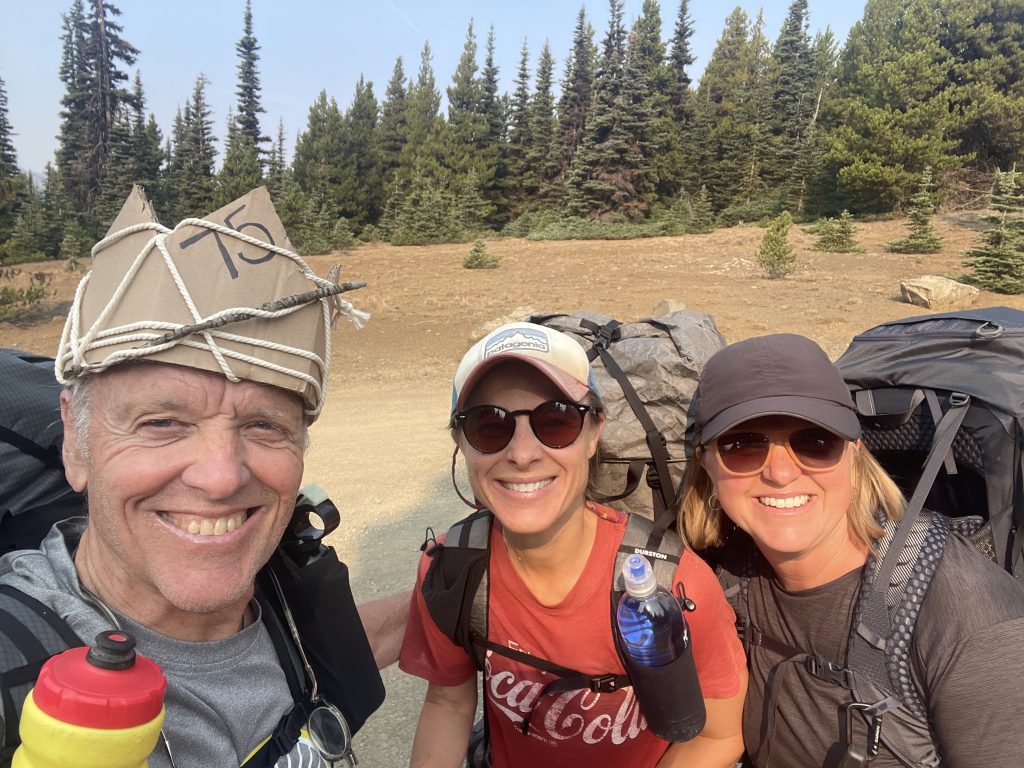
    Smiling, I accepted and donned the homemade crown from my daughter Maren. The jagged perimeter of the royal headpiece mirrored the mountains where we were heading. The number “75” scribbled with a Sharpie on the crown’s front made this a royal birthday headpiece. 

    This crown had no brilliance. It had been forged from a cardboard box and netted with twine to affix pieces of the natural world. 

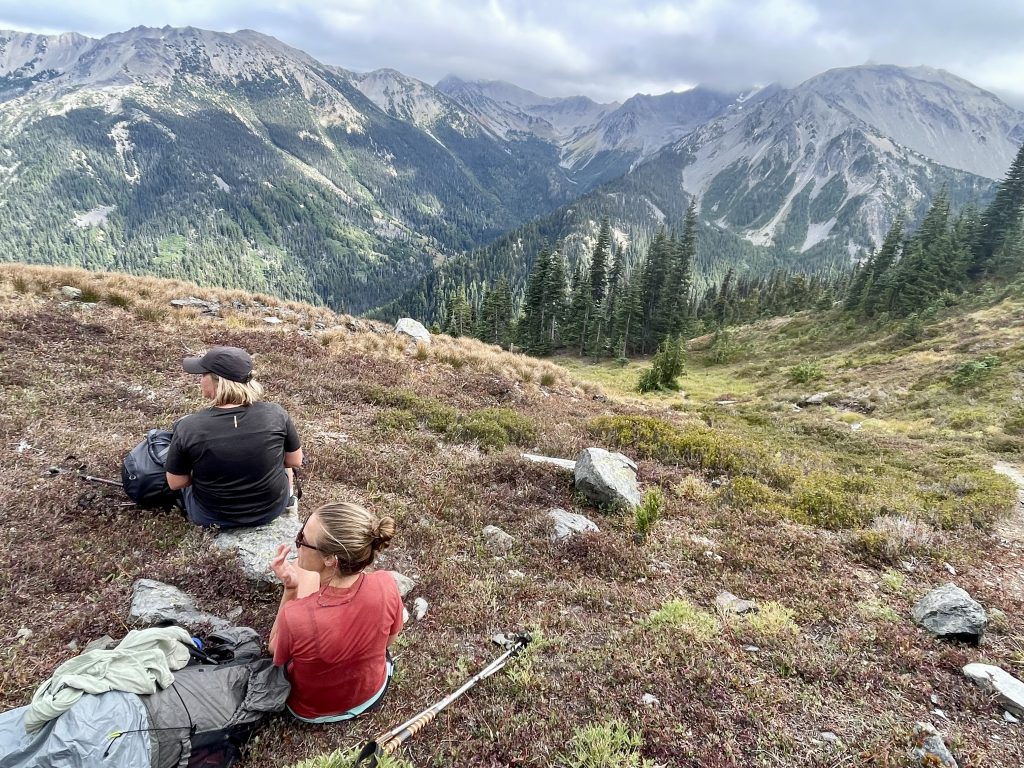
    In the absence of a sword, I raised my hiking pole to the sky and both of my daughters, Princess Britta and Princess Maren lifted theirs to form a steeple of alliance before our royal procession headed up the trail.

    Over the course of the next four-days, the crown was adorned with fern fronds, tendrils of old man’s beard lichen, sprigs of colorful flowers and twigs of aromatic subalpine fir. During some of the long, steep climbs the sweat from my forehead threatened the structural integrity of the crown so it mostly hung on my pack. 

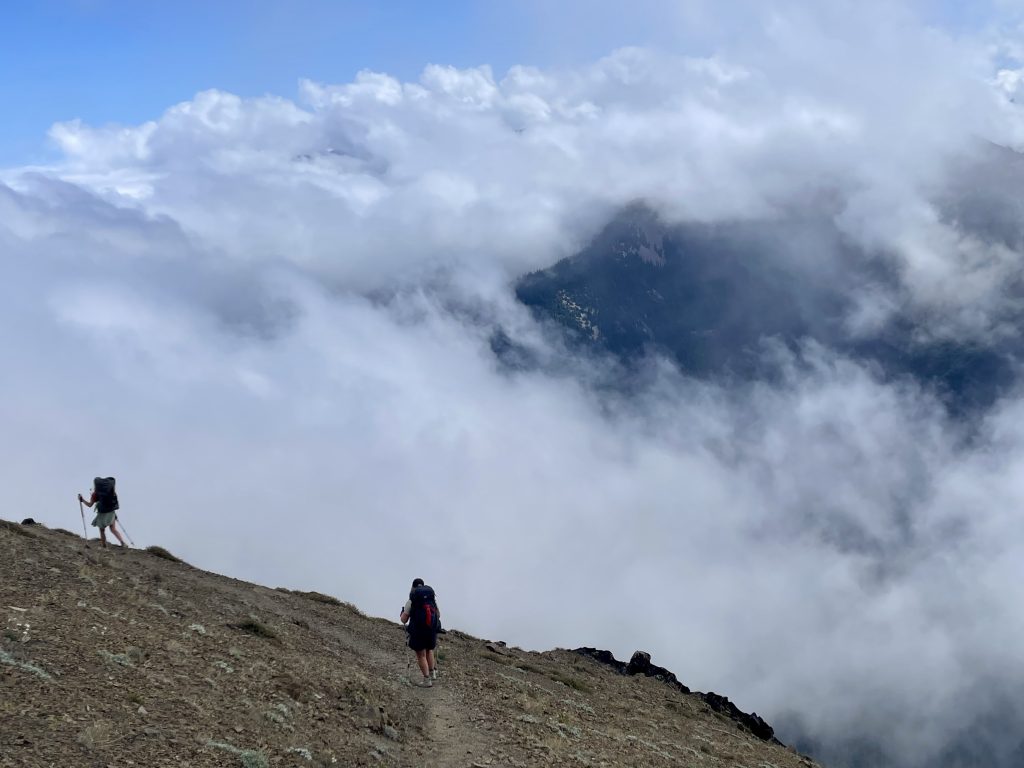
    This hike had been hatched months earlier. The intention was to honor my 75th summer birthday with a daughters-and-father backpacking trip hiking the 42-mile Grand Loop in the Olympic Mountains in Washington state.

    By mid-afternoon we grew less chatty. I found myself feeling such gratitude for being able to do this hike. Like a short song, I whispered to myself, “Thank you feet. Thank you knees, Thank you hips. Thank you back.”

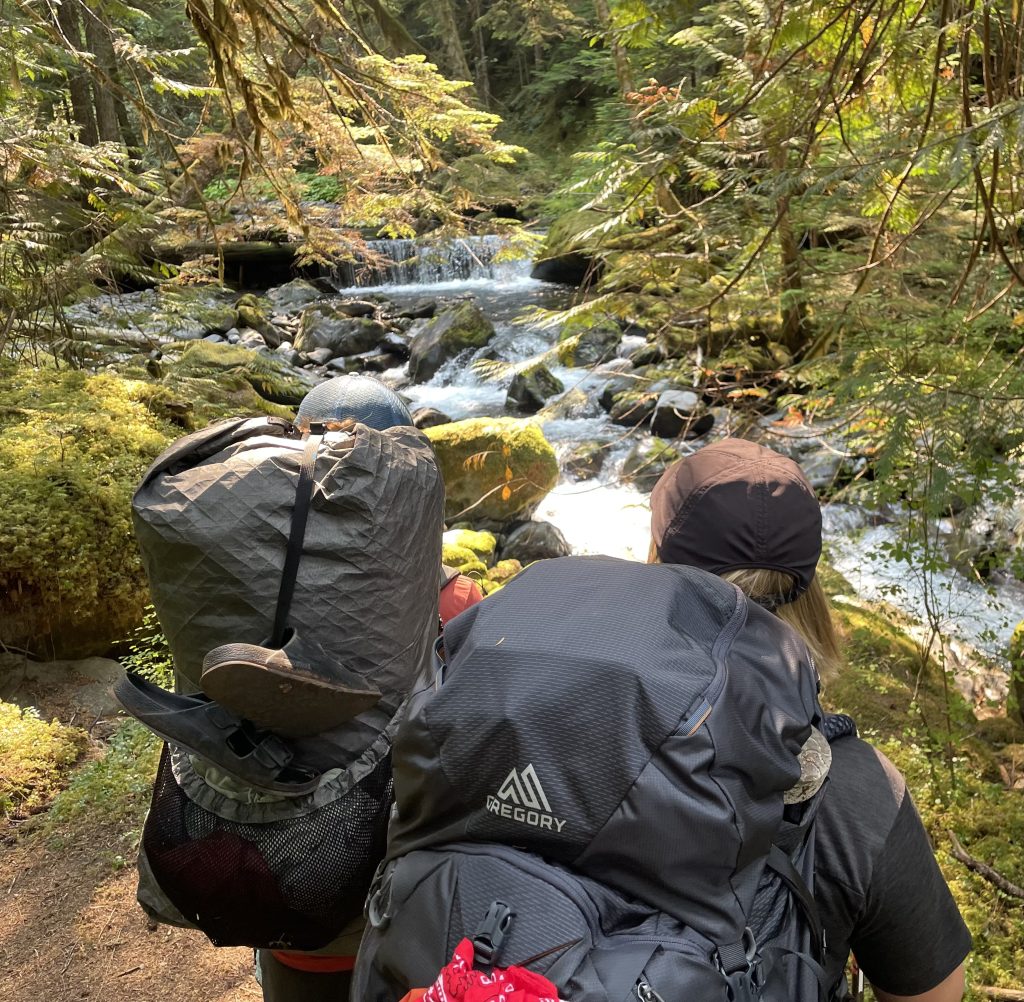
    By late afternoon our feet were tired and some blisters were birthed. It always takes a day to adjust to the bulk and weight of the pack and we relished soaking our feet in the stream flowing next to our tents at day’s end.

    The following morning we climbed out of the timber and into the alpine sunshine as we crested Grey Wolf Pass. During the following long descent I was made painfully aware of my compromised toes. 

    I had made the wrong shoe choice for this trip. Over the past few backpacking trips, I have eschewed my sturdy hiking boots and opted for the lighter trail running tennis shoe. I should have worn my sturdier hiking boots.

    By late afternoon we slid our packs off at our second camp. The first order was to shed our footwear and revel again in soaking our wounded feet in another cold stream that flowed next to our tents.  The nails on both of my big toes looked like someone had applied a gothic black nail polish on them. I was fairly certain I would lose them after the trip. 

    With spirits renewed, we set up our tents. A voice behind us was unexpected.

    “Do you mind if I access the stream here to filter water? It’s easier to get to the water.”

    We looked up and welcomed the tall, white-haired man to help himself. 

    We learned his name was Larry and that he lived about 30 miles away in Sequim. His love of backpacking and trail running explained his gazelle like figure.

    After a pause, he added, “Say you folks don’t happen to have any dental floss you could spare?”

    Noting our puzzled looks he quickly explained,  “My valve on my sleeping pad is leaking and since I had a lousy night sleeping on the hard ground, I thought I might be able to MacGyver it by wrapping dental floss around the valve threads.”

    “Sorry,” we answered.  “The only teeth hygiene tools we have are tooth brushes.”

    He shook his head, “No problem. I really should have checked it out before I left home. Stupid.”

    As long as it was confession time, I shared my mistake of choosing the wrong footwear for this hike and that my feet were protesting the decision. 

    Larry nodded knowingly and suggested, “Maybe you and I should write The Dummies Guide for Getting Old.”

    I chuckled and then asked, “Larry do you mind if I ask how old you are? 

    “Eighty one.”  

    Smiling I responded,  “I want to be like you when I grow up.”

    “I’m not sure that’s a good idea,” Larry said. “Over the past few years, I have become more aware to do that Buddhist thing when I’m out exerting myself and to be in the moment.” 

    We chatted awhile and Larry asked about our route and timeframe. We shared that we planned on hiking the three passes to our Grand Lake campsite the following day. 

    Larry’s eyes widened.“Oh wow! Is that a good idea?” 

    We had been a bit apprehensive about our plan to climb over three passes totaling over 4,200 feet and trek nearly ten and a half miles each day.  Now we really wondered.We had two more days to finish. Was this reasonable? Clearly, if our feet had a say in the matter, the six of them would have given us a thumbs down.

    The following morning we waved a “good morning” to Larry as we headed out at 8 AM. Almost immediately we began zigzagging up the trail for the one-mile, 1000-foot climb. We were fresh and we expressed gratitude for the cool and overcast day. An hour later we reached the top. The descent on the back side was more gentle and took us through some lovely slightly forested meadows. 

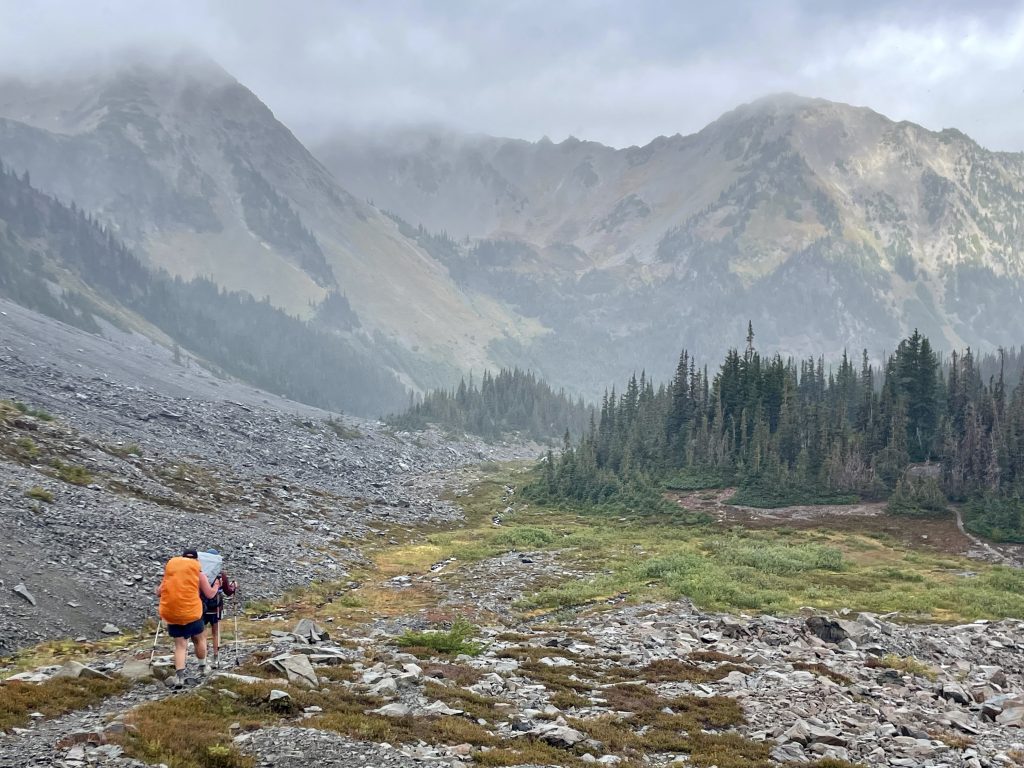
    An hour later we reached the second pass. Climbing Cameron Pass required more pauses to catch our breath. We were glad for the continued overcast skies. Now a light mist made the continual climbing more tolerable. By midday we celebrated getting to the summit of this pass by lunching on a handful of nuts.  Then we began the long descent into the Cameron River Basin.

    During the long descent we flanked the lively stream edged by frequent purple patches of mountain bog gentian. It was serene and lovely.

    I was following Maren and Britta when I looked up at the two of them.  Suddenly I visualized them as two youngsters. Their sisterly banter carried me back decades before. I recalled high spirited canoe trips on the St. Croix River and into the Boundary Waters Canoe Area Wilderness in northern Minnesota. I smiled at the memories of teaching them whitewater canoeing skills in an open canoe on the Brule River in Wisconsin. 

    Then there was the winter when we hollowed out piled snow to make a “snow castle” to spend the night in. They delighted in the magic of candlelight reflected off the crystalline walls. There had been shared tree climbing and a tree house of sorts.

    Like a splash of cold water on my face, I suddenly realized that I might never do something like this with them ever again. Ever. Again. 

    Tears welled up in my eyes. I stifled a sob. Maren heard it and turned to look back, “Dad, are you all right?”

    I paused and nodded. Then the floodgates opened. I blubbered, “I’m good. . . I’m really good.” I expressed that I was so thankful that they chose to suggest and make the time to do this hike with me. I felt an overwhelming sense of gratitude and shared that it was an immense privilege to be here with them.

    Through puddled eyes, I choked, “This. . . this. . . is the best birthday I’ve ever had. Thank you so much!”

    We moved on, two daughters, now seasoned parents themselves and a crowned father, finding a joined rhythm as we began the final, highest pass of the day. And I thought of Larry’s hiking mantra, the Buddhist mantra. . . “Being here now.”  

    “Thank you feet. Thank you knees. Thank you hips. Thank you back.  Thank you lovely daughters.”

  • Jungle Expedition

    “I like to explore,” I declared. Do you suppose we should go explore a spot you’ve never been?”

    With wide eyes, Thomas, my five year-old grandson slowly nodded.

    “We are going to walk to a jungle.”

    Wrinkling his forehead in confusion, he asked, “What? A jungle? Here?”

    Thomas was visiting Minnesota from his home in Tacoma, Washington for the annual summer Opa and Nana Camp. 

    Earlier in the day, he had climbed down the ladder from the loft  in our little log cabin. Both he and his sister fondly refer to the loft as “the nest.” 

    At breakfast, he wondered how I came to be called “Opa.” I shared that it was a title my own father had owned when he was a grandfather. So it only made sense that I should follow suit when I became a grandpa.

    I asked him if he would like to grow up and be like Opa. 

    Very matter-of-factly he replied, “I have to be. He is walking inside my mind. He is in me.”

    Then, with a wry smile, I asked him “Do you think one of your first words spoken as a baby was Opa?”

    “No.”

    “Oh I suppose it was Mama or Dada?”

    “Nope.”

    He looked right at me and in all seriousness reminded me of his first words.

    “Flower in my heart so bright.”

    As matter-of-factly as I could I soberly answered, “Oh yeah, I forgot that.”

    After the invitation to go on a jungle exploration, we pushed away from the table and got ready for an adventure. 

    “Well,” I said, “ on this hike you will have to use your imagination a little bit.”

    I was reminded of such a wilds when I was a youngster. We lived in town until I was in third grade. About a block from our Main Street home, across the street from the Methodist Church, was an overgrown vacant lot. We called it “the grassy green jungle” and it was the nearby wilds where we created trails and tales. Jungles can grip the imagination. 

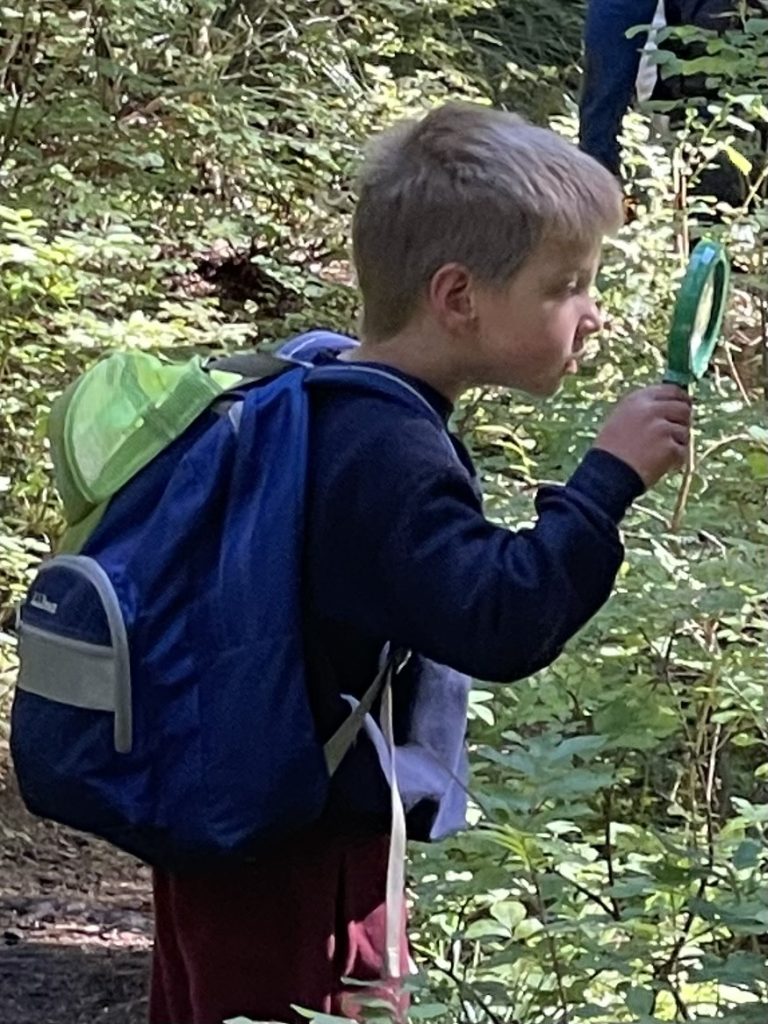
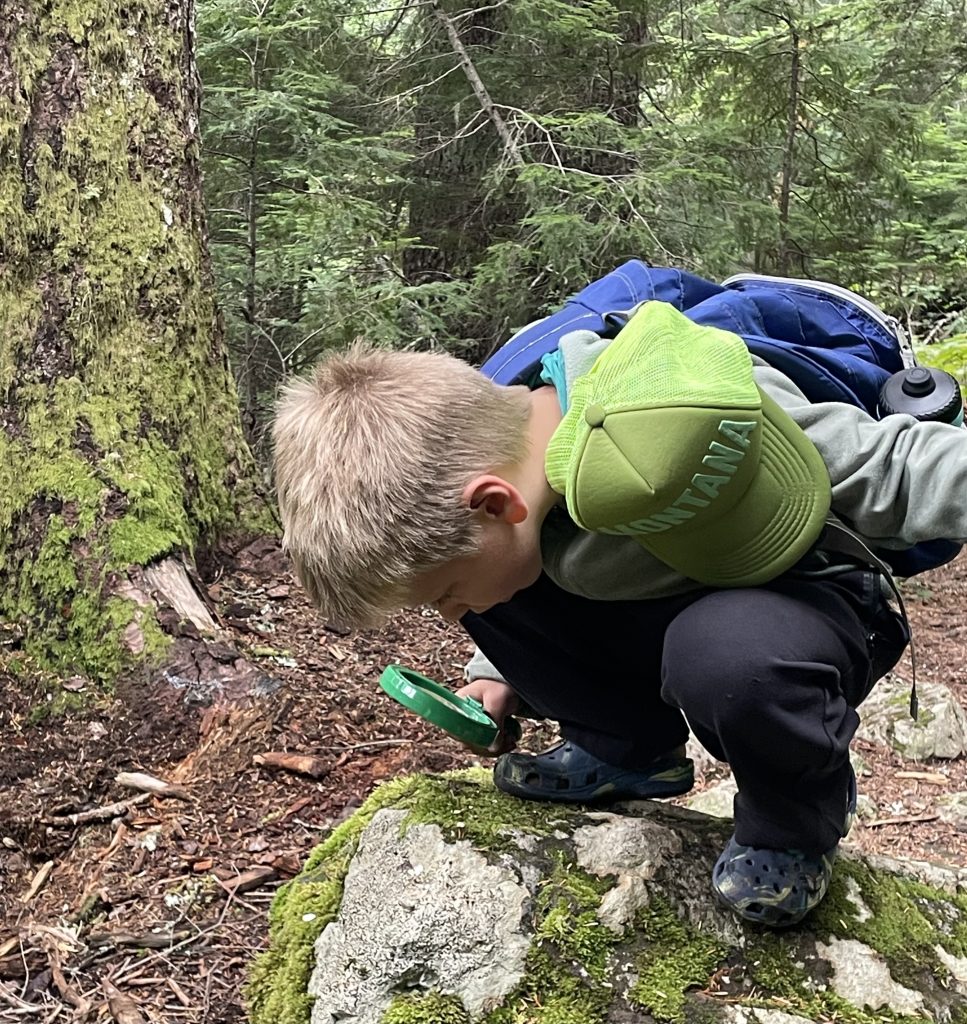
    Thomas and I strolled slowly down our long driveway that is flanked by hedges of brush and trees. The expedition was slow as there were numerous pauses for close looks at little things that only he spotted. At the mailbox, we turned left on the gravel township road and walked perhaps thirty yards before we left the road and walked into our neighbor’s cornfield. 

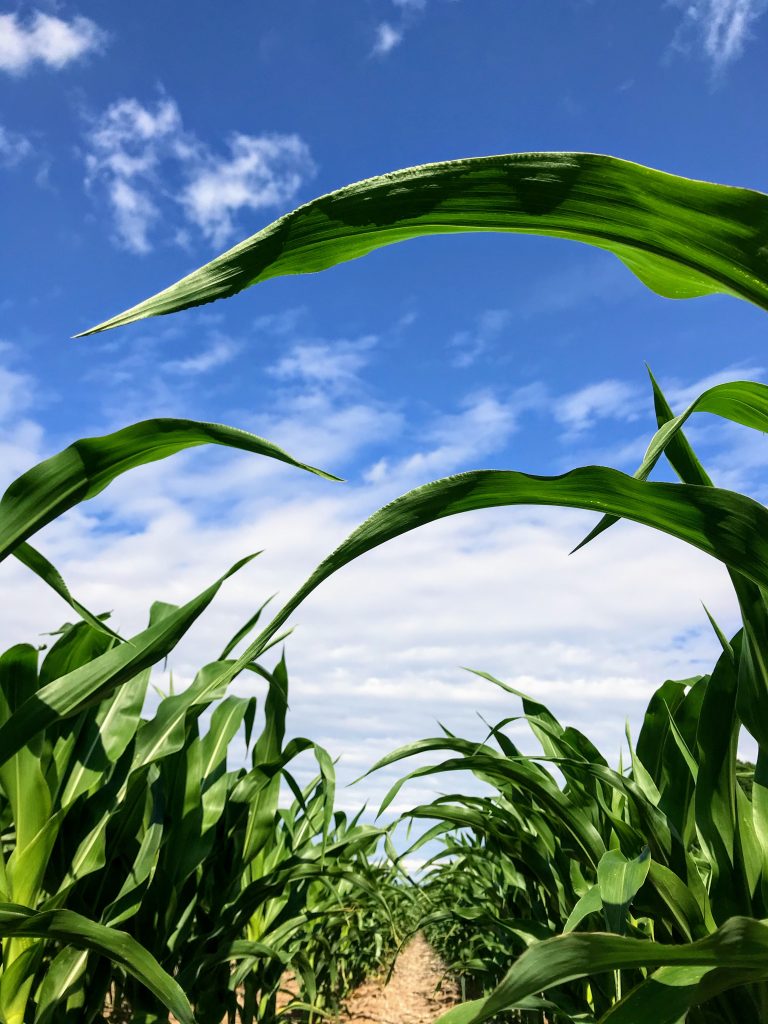
    “This Thomas, is a lush, very green jungle of corn.” I guided him to a row where he was flanked by tall stalks much taller than he.

    He asked, “Can we eat this corn?” 

    I paused before replying “No. But people kind of eat it because most of this corn is fed to animals that we eat like cattle, pigs and chickens. And a bunch is used to make fuel for cars and sugar for pop.”

    “Do any animals live in here?”

    “Nope,” I said, “nothing but corn. 

    Why aren’t there other plants, like trees and flowers?

    “Because only corn was planted and then certain chemicals were sprayed on the ground to keep all other plants from growing. 

    “Aren’t there even any bugs?”

    “Well if you look close you might see some but otherwise it is not very good for anything but corn. You won’t even find worms if you dig into the ground here.”

    Thomas stood just looking at the corn like it was an alien. I wondered if I should tell him that in fact the corn is an alien. 

    Before settlement, there was no corn or any other agricultural crops growing here. The closest crop that would have been found here before Europeans moved here would have likely been the wild rice crop that grew less than a mile east of us. And that crop would have required no chemicals or tilling from the indigenous people who lived here and harvest the native rice for thousands of years.

    I waved him to go ahead and walk into the corn. “Stay in the row you are on and we can walk to our neighbor’s house so you can meet him.” 

     He hesitated. “No need to worry,” I comforted, “I’ll be in another row just a short distance from you.”

    Thomas managed to move a few extra rows distant from me but I could see his hurried path among the jostling corn stalks as he scurried towards my steady banter. After five minutes of jungle trodding we broke out into the bright sunlight and into the neighbor’s yard. Not all jungle expeditions take days or weeks.

    I introduced Thomas to neighbor, Dennis out in his pole building where we found him rattling on some riding mower maintenance. As expected the five-year old was mostly shy. I was surprised that he was more intrigued with the dusty life-sized plastic Christmas carolers stored on a high shelf above the shovels, rakes and chain saws. I would have thought the John Deere tractor or the chain saws might have caught his attention.

    Dennis suggested that Thomas go around to the front yard to the old hand pump and see if he could pump up some water and maybe some frogs. And with that intriguing invitation Thomas quickly grasped my hand and pulled me to the old pump.

    We goth grabbed the long handle and began pumping. Soon water came pulsing out of the spout into the bucket. Squeals erupted when a frog suddenly came flushing out of the spout like a summer kid flying down a slide at a water park. It swam in the bucket and all pumping was halted for frog inspection.

    I explained it was a tree frog and that it had super powers. 

    “Really? Super powers?” 

    “Well, almost,” I explained. It can change the color of its skin so it can blend in to its surroundings. This is a super power that hides it so predators might not see it or to help it more easily catch bugs to eat.”

    I pointed out the tiny rounded toe pads and told Thomas that this frog could walk up a pane of glass, kind of like Spiderman.”

    The explorer’s response of “Cool!” was reward enough for this day of jungle adventure. 

  • Discovering Nova Scotia

    I started scheming last winter, as I sat with a coffee cup in hands staring at the lapping flames encased in the kitchen woodburning stove.

    How could I convince my wife, Miss Nancy, that we should try a cycling tour rather than another Canadian canoe trip? Halfway through my cup of java I grew a satisfied smile. I would tempt her by including her love of music and the fiddle. Those loves would merge on Cape Breton Island in Nova Scotia. It is known for its fiddling that encompasses a lively blend of Scottish and Gaelic styles. Neither of us have ever traveled to the Maritime Provinces and this trip seemed perfect. 

    Unlike the 13th century Italian explorer, John Cabot who sailed over a month to accidentally arrive on the rugged rocky coast of what was to someday become Nova Scotia, we would fly to Halifax. 

    In 1496, England’s King Henry VII granted Cabot the right to sail west in search of a trade route to Asia. His ensuing voyage never made it to Asia because he bumped into a rugged continent which he immediately claimed for England.

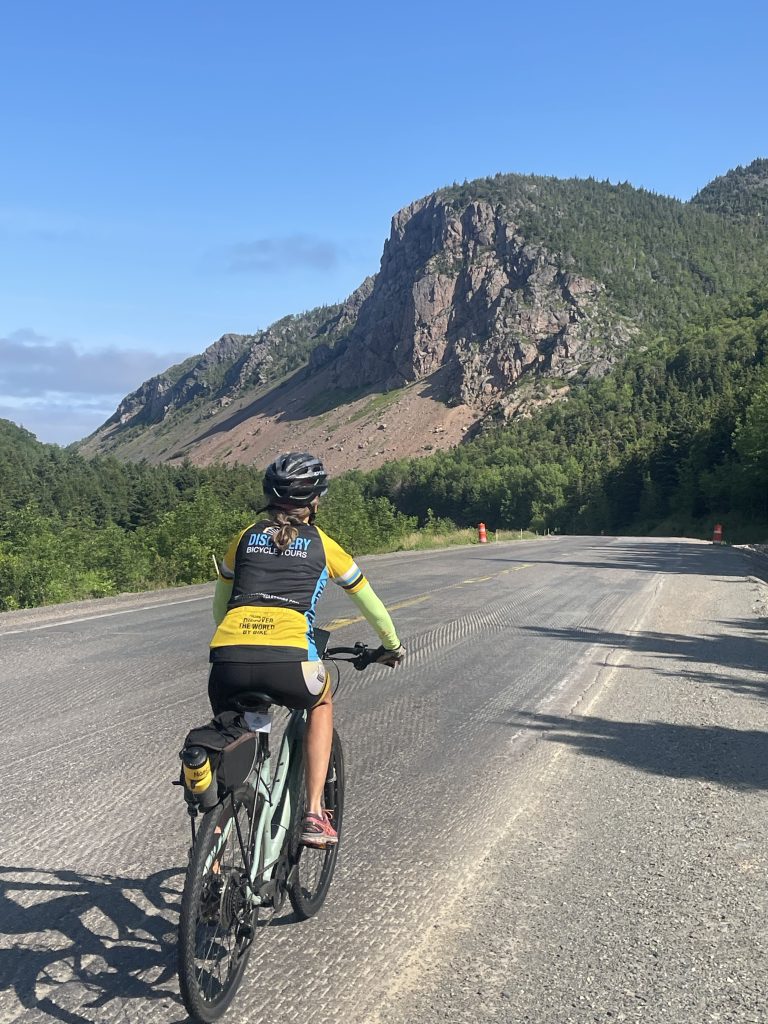
    My plan worked. We signed up with Discovery Cycling Tours to cycle the Cabot Trail on Cape Breton Island.  The trip information beckoned: “Experience the Cabot Trail’s legendary climbs.”  Miss Nancy expressed some concern over that line.  Admittedly I felt a twinge of “yikes” but kept my concern to myself. 

    Two years ago Miss Nancy had been inflicted with Lyme’s disease and it had almost crippled her in her knee. She still experiences some slight pain so I was glad she decided to choose an electric-assist bike rather than a pedal or analogue bike.

    We went an extra week earlier to take in the sights including one of the best known Nova Scotia music fests, The Stan Rogers Folk Music Festival, also known as StanFest.

    The late Stan Rogers is held almost mythically in these parts. He is also a favorite of Nancy’s and mine. His song Northwest Passage is viewed by many Canadians as an anthem and we heard it several times performed by different musicians.

    Finally our group of cycling companions converged and we traveled north from Halifax by van to our starting point on Cape Breton Island. 

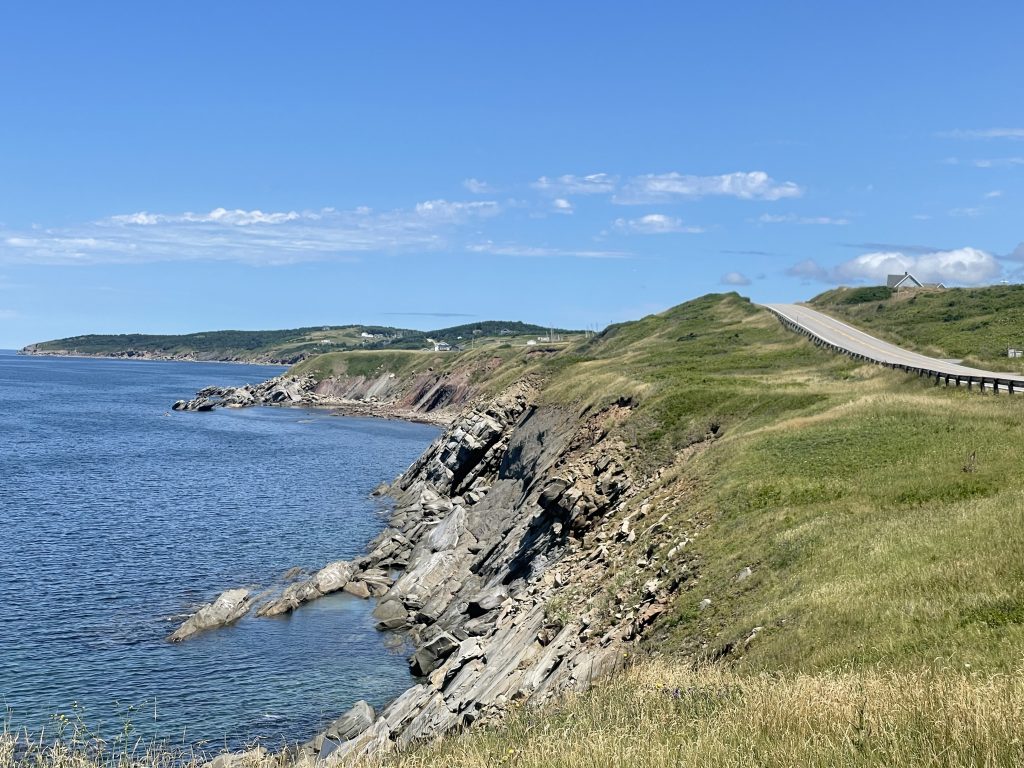
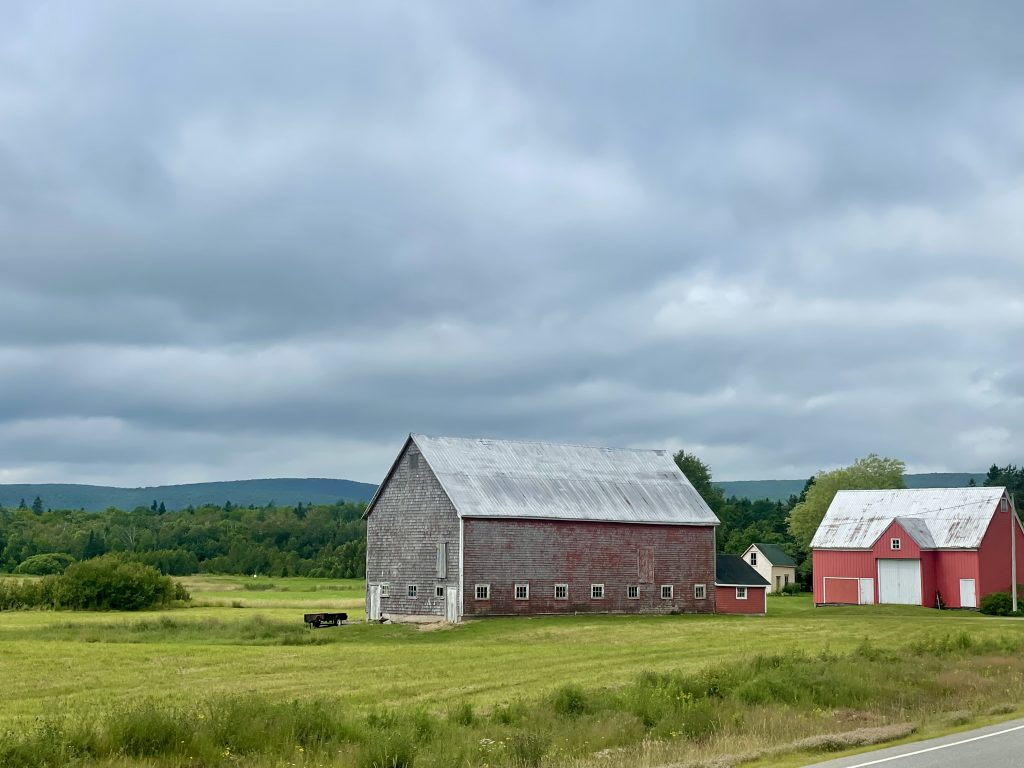
    The first two days had us cycling past numerous pastoral farms, a trail of old steepled churches of various denominations and expanses of spectacular rugged coastlines. I was also struck by how undulating the Cabot Trail was with plenty of oxygen-sucking climbs. 

    On our second night Nancy got the opportunity to play a borrowed fiddle to accompany a professional Cape Breton musician.

    Before the trip I was sort of dreading day four. I knew we had to face two major climbs on this day. And on top of it this was our longest cycling day of the trip: fifty miles. Now that I am seventy five years old, whether I am cycling, cross country skiing or backpacking, I have come to know that I relish a day off after a couple of extended workout days. Admittedly, this tour ride was no race and the guides always reminded us to have a relaxed, enjoyable tour.  “Remember this is your vacation!”

    After dinner, on the eve of our big cycling day where we would gain 4,700 feet in elevation, guide Mark asked for our attention. He wanted to give us a rundown on what to expect the following day. 

    I squirmed when Tom, the older guide, spoke up. He generally bears an almost mischievous smile overseen by a decidedly Irish twinkle in his eyes. He is a seasoned bike mechanic and has twice won the Nova Scotia mountain bike championship for his age group.

    Tom’s face turned more sober when he shared his experience with the two testy climbs we would encounter. 

    “French Mountain, our first big climb of the day, is a serious three and a half miles of non-stop pedaling. There are no. . . zero. . . breaks on a 8 to 10% average gradient. And there are sections where the gradient is right around 16%. For perspective, we had a European cyclist in our group one year who had cycled both Mont Blanc and Alpe d’Huez. Both of those famed Alps climbs average a 6-8 % gradient.  He claimed climbing French Mountain was much tougher.”

    Our table got much quieter. Tom continued, “Those of you riding e-assist bikes need to be aware of how much power you have in your bike batteries. Those of you who on analogue, I will be sitting with the trailer in the trailhead parking lot at the base of the mountain for half an hour. If you find it too difficult, please turn around, glide back down and I will put your bike on the trailer and you can ride an e-bike up. Remember this is your vacation.” 

    From day one, I had often found myself pedaling with two Pennsylvania friends, Will and Bob. Bob was a determined beast on a bike but he was admittedly only 66 years old. Will was very steady and determined and he and I started up French together with Bob ahead of us.

    We had climbed perhaps 300 meters when Will turned and between breaths huffed over his shoulder, “Don’t worry it’s going to get worse before it gets a lot worse.”

    In a lovely synchronized turn we turned our bikes and shot down the grade back to Tom to switch out for the electric assist bikes. After a short lesson on how to use them, we returned to the climb. 

    After that big day, our evening feast took on a more celebratory nature. There was lobster and seafood to eat, the brisk waters of the Atlantic to dip into to soothe our leg muscles. Smiles continued to be rampant and soon we had to bid farewell to our gang. 

    For two days after returning to Minnesota, my thighs ached. I soothed myself by reminding myself that the souvenirs of soreness were so worth it in the beauty and companionship I experienced from fellow cyclists and the friendly folks of Nova Scotia.