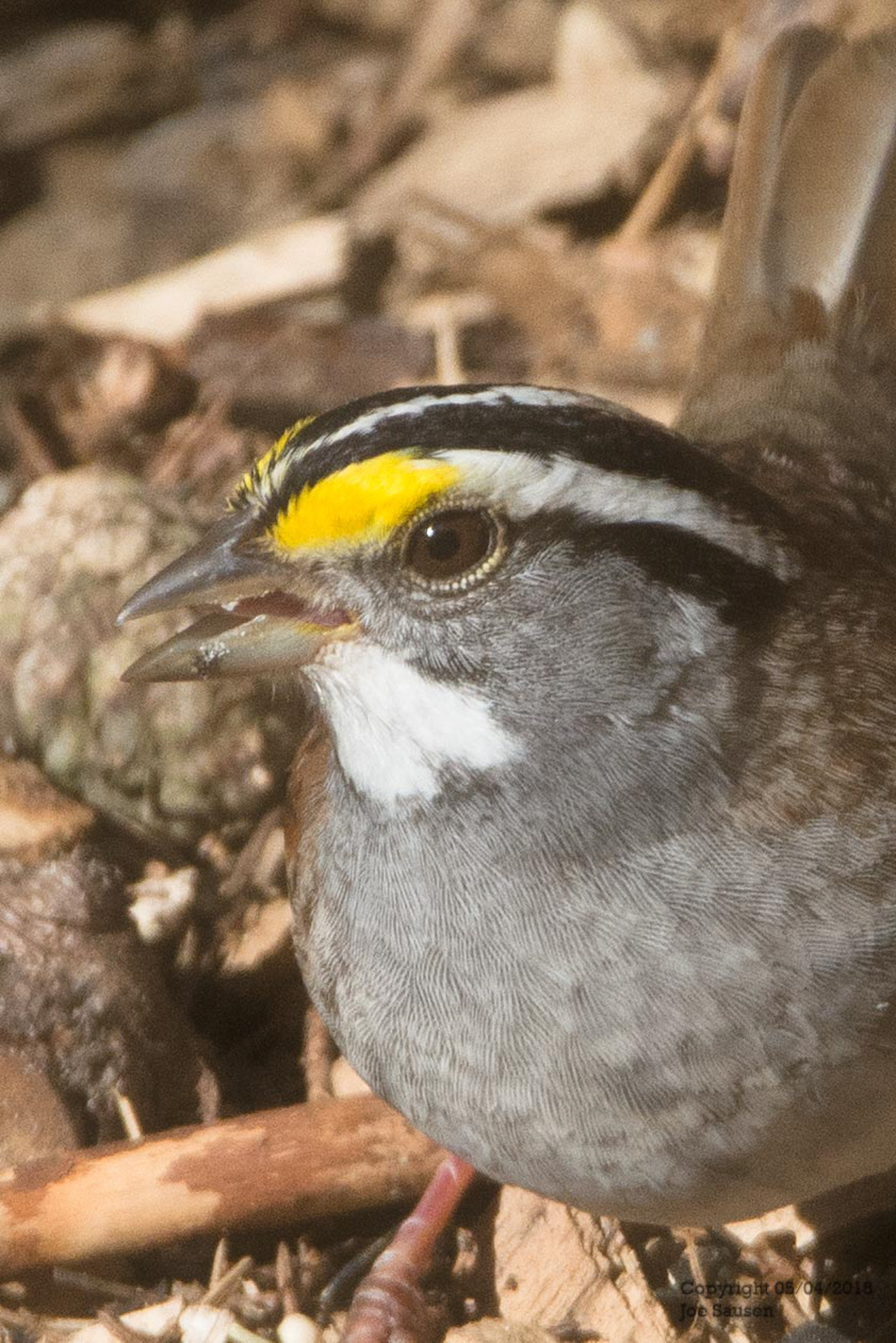
The song was like a performance where the singer stumbles on the lyrics. I was sitting on the open porch of my log cabin admiring the fall colors when I heard the fumbled notes of what had to be an immature male white-throated sparrow.
I smiled. It had me thinking of an adolescent boy whose voice teeters between Little League and the major leagues. His sentences squeak and break as if hatching from boyhood to a deeper manhood baritone.
So it is with male white-throated sparrows.
Next May there be no immature sparrow flying north to its boreal nesting grounds. All the males will be capable of breeding and all of them will sing the pure territorial notes that many of us have learned using the help of a mnemonic. Mnemonics help us learn bird songs by putting the notes to words. In this case the sparrow seems to repeat “Oh sweet Canada. . . Canada. . . Canada.” Or “Poor Sam Peabody. . . Peabody. . . Peabody.”
The bird I heard from the cabin porch hatched just months ago. It is called a juvenile or hatching year bird. The bird would fail the maturity audition as its song had awkward notes and was incomplete. “Oh sweet Cana. . .”
These sparrows will be around for a few weeks in the fall on their way south. The autumnal migration is much slower than the northerly spring journey.
I slipped off the porch and eased towards a dogwood thicket where the incomplete song had been attempted. I heard several robins in the thicket. Like the sparrows, the robins are gathering into migratory flocks. Though I couldn’t see them, they sounded like they were softly chuckling in their contact calls.
Suddenly, I heard a staccato of squeaky chinks, the alarm calls from the ground feeding sparrows, followed by a sudden swoosh as they flushed and left me alone.
During the years when I banded birds at the Warner Nature Center, I became very familiar with their alarm chirps. The fine mesh of the forty-foot long, seven-foot high nets could be empty one minute and full of birds the next. Sometimes the alarm calls of the ensnared birds would attract others to the net.
When we tallied over forty years of banding data we discovered that of all the thousands of birds banded at the nature center, white throated sparrows and yellow-rumped warblers were caught more than any other songbird.
I cannot hear the white-throats’ alarm call without a smile. After all it was the alarm call that helped us find a beloved cat that had gone astray.
Over thirty years ago, my two young daughters had pleaded that our cat, Whitey, join us on a day trip in the Boundary Waters Canoe Area to pick blueberries. I recall expressing the absurdity of such a request. But this was a case where the squeaky wheel wins the day and little girls are hard to say no to. Reluctantly I surrendered to their joined appeals.
Paddling across the first lake it was as if the cat was purposely goading me by tightroping along the wooden gunwale of the canoe. I gritted my teeth and considered giving the canoe an exaggerated shiver just to test the cat’s nimbleness or swimming skills.
We scattered into the bush and picked blueberries all day. By midafternoon, we started gathering up our day packs and buckets of berries for the return paddle and the long drive home. Where was the cat?
We called and called. We combed the nearby jack pine, spruce and birch forest pleading for it to come out. My daughters were on the edge of tears. What can we do?
After an hour of searching we sulked to the loaded canoe. We had to go and now there were tears. It was then that I heard the nearby alarm call of the white throat. I turned my head to listen more keenly. The upset bird was vocalizing from a thicket of spruce not twenty yards from our loaded canoe. I lifted a thick lower spruce limb and there was a very content cat splayed out, looking at me through partially open eyes as if it was wondering why I was bothering it. It was the perfect model of cat independence.
Bubbles of boreal joy emitted through the forest as we celebrated the reunion. The cat was scooped up and hugged constantly on the return paddle.
With the cat removed, the quietude of the boreal forest settled and I suspect the sparrow felt victorious in driving the feline away.
Whether fully voiced or incomplete in their notes, I can never see sparrows as little brown birds not worthy of a second look.
Leave a Reply
You must be logged in to post a comment.